Commercial Plant Maintenance: What's Included?
If you've ever walked into an office with thriving greenery, healthy indoor trees, and vibrant plants throughout the space, there's usually one reason behind it: professional commercial plant maintenance.
Many businesses invest in interior plants to create a more welcoming environment for employees, customers, and visitors. But keeping those plants healthy requires more than occasional watering. Professional plant maintenance programs provide ongoing care that protects your investment and ensures your plants continue to enhance your space year-round.
In this guide, we'll explain what's typically included in commercial plant maintenance services and why businesses throughout Phoenix choose professional plant care programs.
What Is Commercial Plant Maintenance?
Commercial plant maintenance is an ongoing service designed to keep indoor plants healthy, attractive, and professionally maintained.
Rather than assigning plant care responsibilities to office staff, businesses partner with trained horticultural technicians who regularly inspect and care for every plant in the space.
Maintenance programs can be customized for:
Office buildings
Medical offices
Corporate campuses
Hotels and hospitality spaces
Retail environments
Multifamily communities
Senior living facilities
Educational institutions
The goal is simple: healthy plants that consistently look their best.
What's Included in Commercial Plant Maintenance?
While services vary slightly between providers, most professional maintenance programs include the following.
Regular Plant Watering
Watering may seem straightforward, but it's one of the most common causes of plant failure.
Different plants require different watering schedules depending on:
Species
Container size
Light exposure
Indoor temperature
Seasonal conditions
Professional technicians monitor soil moisture and adjust watering schedules based on each plant's needs rather than following a one-size-fits-all routine.
Pruning and Grooming
Plants naturally produce yellow leaves, dead foliage, and uneven growth.
Routine grooming helps maintain a clean, polished appearance by removing:
Dead leaves
Brown tips
Damaged foliage
Spent flowers
Excess growth
Regular pruning also encourages healthier plant development and prevents plants from becoming overgrown.
Fertilization
Indoor plants rely on nutrients to remain healthy and vibrant.
Commercial maintenance programs typically include fertilization schedules designed to support:
Healthy root systems
Consistent growth
Strong foliage color
Long-term plant health
Technicians apply fertilizers carefully to avoid nutrient deficiencies or overfeeding.
Pest Monitoring and Treatment
Let’s face it: bugs happen. Even indoor plants can experience pest problems.
Common issues include:
Fungus gnats
Mealybugs
Scale insects
Spider mites
Professional technicians routinely inspect plants for early signs of infestation and take corrective action before problems spread throughout the installation.
Early detection is one of the biggest advantages of a professional maintenance program.
Plant Cleaning and Dust Removal
Dust accumulation can impact both appearance and plant health because dust interferes with a plant’s natural interaction with light and air, inhibiting photosynthesis.
Maintenance visits often include:
Cleaning leaves
Removing debris
Polishing broad-leaf plants
Improving overall presentation
Clean plants not only look better but can also absorb light more efficiently.
Health Monitoring and Problem Diagnosis
Plants communicate stress through visible symptoms.
Professional technicians monitor for signs of:
Overwatering
Underwatering
Nutrient deficiencies
Pest damage
Light-related stress
Environmental issues
By identifying problems early, technicians can often prevent costly plant replacements.
Plant Replacement Guarantees
Many commercial plant maintenance providers offer replacement guarantees as part of their service programs.
If a plant declines despite proper care, the provider may replace it at no additional cost depending on the service agreement.
This is particularly common with plant leasing programs.
A replacement guarantee helps businesses maintain a professional appearance without worrying about unexpected replacement expenses.
Seasonal Plant Rotations
Some businesses like to refresh their interior landscape throughout the year.
Depending on the program, maintenance services may include:
Seasonal flowering plants
Holiday displays
Rotating accent plants
Reception area updates
These enhancements help keep commercial spaces looking fresh and engaging.
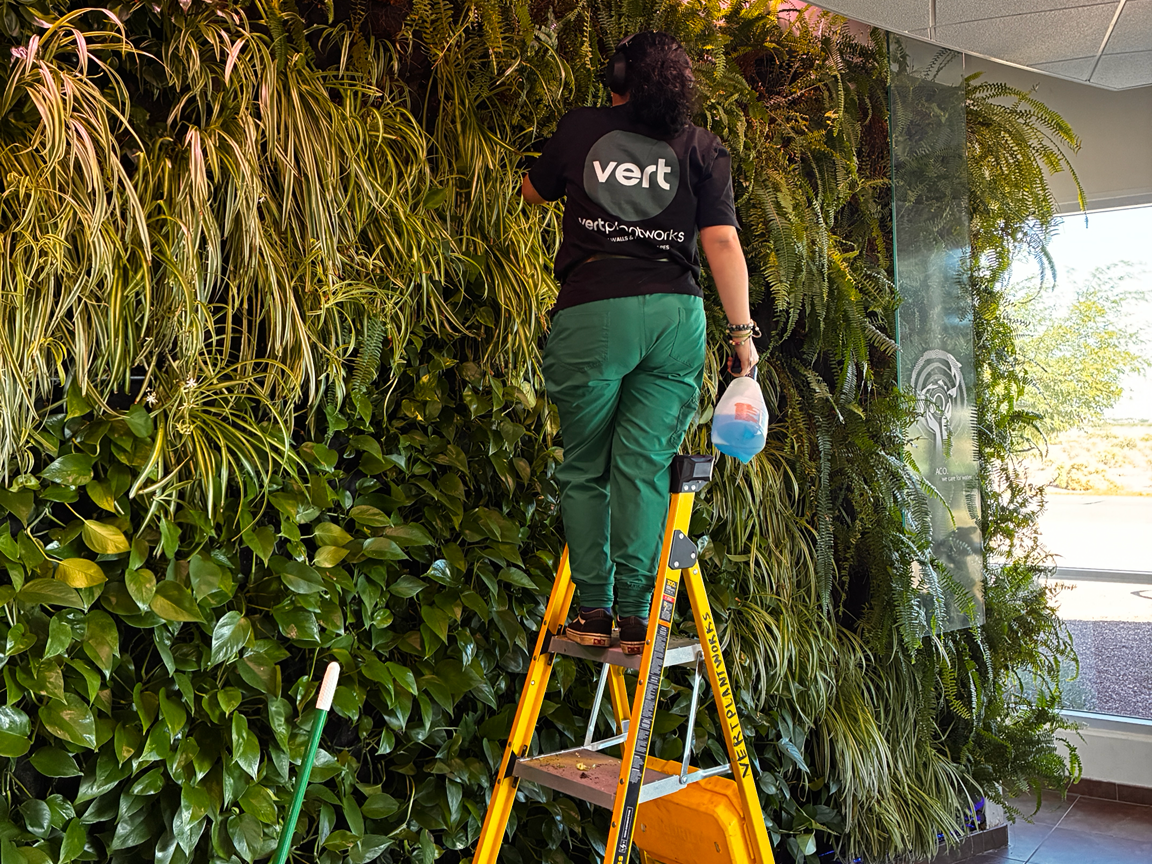
A Vert Plantworks horticulturalist hard at work in an office lobby.
Do Maintenance Programs Include Plant Leasing?
Often, yes.
Many commercial plant providers offer plant leasing programs that combine:
Plant selection
Decorative containers
Installation
Ongoing maintenance
Replacement guarantees
For businesses, leasing simplifies budgeting because everything is bundled into a predictable monthly investment.
Others choose to purchase plants outright and pay separately for maintenance services.
Both options can be effective depending on your goals and budget.
How Often Are Maintenance Visits Scheduled?
The frequency of service depends on the installation.
Most Phoenix commercial properties receive:
Weekly service
Bi-weekly service
Customized service schedules for specialty installations
Living walls, hospitality environments, and large tropical installations may require more frequent visits.
During a site consultation, your provider can recommend the appropriate schedule based on plant types and environmental conditions.
Why Professional Plant Maintenance Matters in Arizona
Arizona presents unique challenges for indoor plants.
Factors such as:
Extremely low humidity
Intense sunlight
Air-conditioned environments
Seasonal temperature fluctuations
can all affect plant health.
Professional plant technicians understand how local conditions impact indoor plants and adjust care strategies accordingly.
Without regular maintenance, even high-quality plant installations can decline quickly.
What Should You Look for in a Commercial Plant Maintenance Provider?
When comparing providers, ask the following questions:
How often are maintenance visits performed?
Are plant replacements included?
Do you offer plant leasing programs?
Do technicians specialize in commercial environments?
Can you service large installations or living walls?
Do you have experience working with businesses similar to ours?
The best provider isn't necessarily the cheapest. Reliability, expertise, responsiveness, and replacement guarantees often deliver far greater long-term value. For more information on what determines pricing, check out our Plant Maintenance Pricing Guide.
Professional Plant Care Protects Your Investment
Commercial plants are an investment in your workplace environment, brand image, and employee experience.
Without proper care, that investment can quickly lose value. With professional maintenance, plants remain healthy, attractive, and impactful year-round.
Whether you're maintaining a few statement plants or managing a large-scale interior landscaping program, professional commercial plant maintenance helps ensure your plants always make the right impression.
Interested in professional commercial plant maintenance in Phoenix? Contact Vert Plantworks to discuss a customized maintenance program for your facility.